Boeing announced today that a comprehensive set of improvements that will add several layers of additional safety features to the lithium-ion (Li-ion) batteries on 787 commercial jetliners are in production and could be ready for initial installation within the next few weeks. New enclosures for 787 batteries also are being built and will be installed in airplanes in the weeks ahead. Battery system changes include changes to the battery itself, the battery charging unit and the battery installation.
Earlier this week the FAA approved Boeing's certification plan, which lays out the discrete testing to be done to demonstrate that the battery improvements address the conditions laid out in the Airworthiness Directive that has suspended 787 commercial operations.
The enhancements to the battery system address causal factors identified by the Boeing technical team as possible causes of battery failure. The technical team's findings also were verified by an independent group of Li-ion battery experts from a number of industries, universities and national laboratories.
"We've come up with a comprehensive set of solutions that result in a safer battery system," said Mike Sinnett, vice president and chief project engineer, 787 program, Boeing Commercial Airplanes. "We have found a number of ways to improve the battery system and we don't let safety improvements go once they are identified. We incorporate them into our processes and products."

Boeing 787 Battery Solution (click to enlarge)
The first layer of improvements is taking place during the manufacture of the batteries in Japan. Boeing teamed with Thales, the provider of the integrated power conversion system, and battery maker GS Yuasa to develop and institute enhanced production standards and tests to further reduce any possibility for variation in the production of the individual cells as well as the overall battery.
"We've all developed a better understanding of the sensitivities of this technology to variations during the manufacturing process," said Sinnett. "And we all feel the need to increase monitoring of this process on an ongoing basis."
Four new or revised tests have been added to screen cell production, which now includes 10 distinct tests. Each cell will go through more rigorous testing in the month following its manufacture including a 14-day test during which readings of discharge rates are being taken every hour. This new procedure started in early February and the first cells through the process are already complete. There are more than a dozen production acceptance tests that must be completed for each battery.
Boeing, Thales and GS Yuasa have also decided to narrow the acceptable level of charge for the battery, both by lowering the highest charge allowed and raising the lower level allowed for discharge. Two pieces of equipment in the battery system – the battery monitoring unit and the charger are being redesigned to the narrower definition. The battery charger will also be adapted to soften the charging cycle to put less stress on the battery during charging.
Changes inside the battery will help to reduce the chances of a battery fault developing and help to further isolate any fault that does occur so that it won't cause issues with other parts of the battery.
To better insulate each of the cells in the battery from one another and from the battery box, two kinds of insulation will be added. An electrical insulator is being wrapped around each battery cell to electrically isolate cells from each other and from the battery case, even in the event of a failure. Electrical and thermal insulation installed above, below and between the cells will help keep the heat of the cells from impacting each other.
Wire sleeving and the wiring inside the battery will be upgraded to be more resistant to heat and chafing and new fasteners will attach the metallic bars that connect the eight cells of the battery. These fasteners include a locking mechanism.
Finally, a set of changes is being made to the battery case that contains the battery cells and the battery management unit. Small holes at the bottom will allow moisture to drain away from the battery and larger holes on the sides will allow a failed battery to vent with less impact to other parts of the battery.
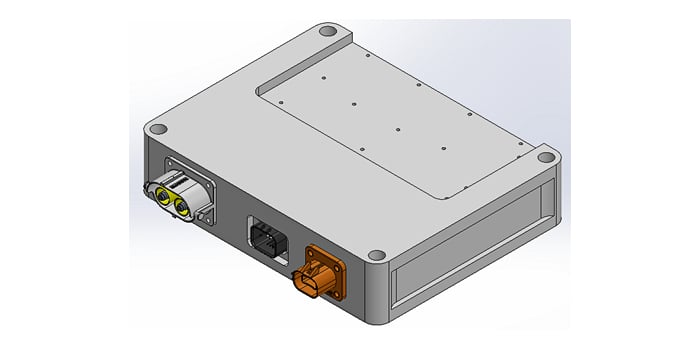
The battery case will sit in a new enclosure made of stainless steel. This enclosure will isolate the battery from the rest of the equipment in the electronic equipment bays. It also will ensure there can be no fire inside the enclosure, thus adding another layer of protection to the battery system. The enclosure features a direct vent to carry battery vapors outside the airplane. New titanium fixtures are being installed in the electronics equipment bays to ensure the housing is properly supported.
"Our first lines of improvements, the manufacturing tests and operations improvements, significantly reduce the likelihood of a battery failure. The second line of improvements, changes to the battery, helps stop an event and minimize the effect of a failure within the battery if it does occur. And the third line of improvements, the addition of the new enclosure, isolates the battery so that even if all the cells vent, there is no fire in the enclosure and there is no significant impact to the airplane," said Sinnett.
Testing to gain FAA approval of the battery enhancements has already started, with the FAA's permission. During engineering testing, which occurs prior to certification testing, the team demonstrated that the new housing could safely contain a battery failure that included the failure of all eight cells within the battery. The "ultimate" load is the equivalent of 1.5 times the maximum force ever expected to be encountered during a battery failure. The housing easily withstood this pressure and did not fail until the pressure was more than three times the ultimate load.
Through another test, the team demonstrated that fire cannot occur within the new enclosure. Its design eliminates oxygen, making the containment unit self-inerting. Inerting is a step above fire detection and extinguishing as it prevents a fire from ever occurring. The design also vents all vapors by venting directly outside of the airplane rather than into the equipment bay.
"We put this new design through a rigorous set of tests. We tried to find a way to introduce a fire in the containment but it just wouldn't happen. Even when we introduced a flammable gas in the presence of an ignition source, the absence of oxygen meant there was no fire.
"We drew from the new industry standard, DO311, established by RTCA, to establish our testing plan," said Sinnett. "These standards weren't available when we set the testing plan for the baseline battery and they helped us ensure the new design is robust and safe. We intend to show, during certification, that the 787 battery meets all objectives of DO-311 and only deviates from specific requirements where the 787-unique items are not covered by the standards." RTCA is a not-for-profit organization that serves as a federal advisory committee in establishing guidelines for the aviation industry.
"We are following all of the necessary protocols to get our new design fully approved and properly installed so that we can help our customers start flying as soon as possible. We're simultaneously moving out on an effort to resume deliveries but completing our certification work and getting the delivered fleet flying again is our first priority," said Conner. "Our customers and their passengers have been incredibly patient as we have worked through this process and we thank them very sincerely for their continued support and confidence in the 787.
"The more-electric architecture of the 787 brings real value not just to the airlines but to our industry. By reducing fuel use, we are reducing our environmental footprint. This battery technology is an important part of the more-electric architecture, which is helping us to cut fuel use by more than 10 billion gallons of fuel over the life of this program. New technologies require extra attention and hard work, but the benefits are real."